Pre-Loved and Salt-Air Worn: How to Hunt Vintage Coastal Jewellery in Charity Shops and Antique Fairs
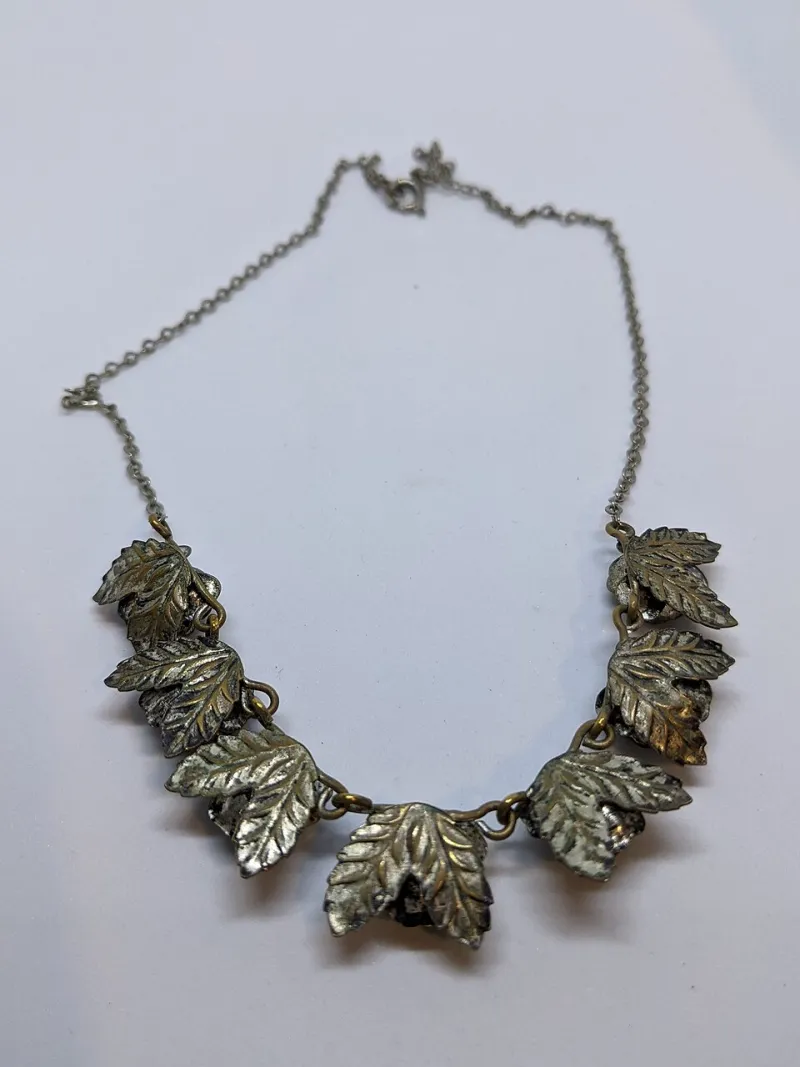
Photo: Smirkybec, CC BY-SA 4.0, via Wikimedia Commons
The case against new
Every June, the high street releases roughly the same shell pendant, the same faux-pearl strand, the same anchor charm, and every June it looks tired by August. The plating goes at the clasp, the faux pearls have a whiff of plastic, and the whole thing feels like it was made to survive one wedding.
Meanwhile, in a charity shop two streets back from the seafront, there is a 1960s sea-glass drop earring and a boxed brass shell brooch for the price of a coffee. That is the argument of this article, and I am not going to pretend to be neutral about it: for coastal style, pre-loved sparkle usually wins. The pieces are heavier, the clasps are better, the stones are set rather than glued, and the wear on them already looks like a holiday.
Why vintage costume jewellery suits the coast
Costume jewellery made between roughly 1940 and 1990 was built to a standard that has largely disappeared. Stones were hand-set into prongs. Rhinestones were foil-backed and prong-set. Base metals were brass or proper pot metal, heavily plated. Clasps were roll-over or box clasps with a safety catch, not the thin spring rings that snap on the second wear.
It also suits the aesthetic. Coastal style is relaxed, slightly weathered, and allergic to looking new-in-box. A brass starfish that has lost a little lacquer is a better object than a shiny one that never had any character to begin with.
The four things to hunt
Sea glass pendants and earrings
Look for a bezel setting with a closed back, and check that the glass sits tight and does not rattle. Genuine pieces usually have variation in the glass — a bubble, a milkiness, an uneven edge. Perfectly uniform triangles of identical green glass are almost always manufactured, which is fine if you like them, but do not pay antique-fair prices for it.
Shell brooches
The most underrated category on this list. Brooches got a bad reputation somewhere in the 1990s and never fully recovered, which means they are cheap. A 1950s faux-coral shell brooch pinned to the lapel of a navy blazer, or to the strap of a canvas tote, is a shortcut to looking like you have been going to the same harbour for thirty years.
Faux pearl strands
Old faux pearls can be genuinely beautiful — glass-based, hand-knotted, with a lustre that plastic beads cannot fake. Check the thread: if it is filthy or frayed, restringing will cost more than the necklace. And check the coating at the drill holes, where wear shows first.
Nautical charms and charm bracelets
Loose charms turn up constantly in job lots and mixed trays at fairs. Buy the tray for a tenner, keep the anchor and the lifeboat, and let the rest go back into a rummage box. Charms from the 1950s and 60s are often better modelled than anything produced now.
Spotting quality on a trestle table
You have about ninety seconds before someone else picks it up. Here is what to do with them.
Weight it in your hand. Good costume jewellery has heft. If it feels like a crisp packet, put it down.
Work the clasp three times. Open, close, open, close, open, close. If it is loose, bent or does not snap, walk away — a replacement clasp costs more than the piece.
Look at the stones from an angle. Prong-set stones are worth repairing. Glued stones are not. If three have already fallen out, that tells you about the glue.
Turn it over. Signed pieces hold value and are usually better made — names like Monet, Trifari, Sarah Coventry and Avon on the US side, and Exquisite, D'Orlan and Ciro on this one. A British silver piece should carry a hallmark; if it is stamped sterling or 925 without one, treat it as plated until proven otherwise.
Check the wear points. Plating rubs through at the clasp and on the back of a pendant. A little is patina, a lot is a green wrist.
Ask about the box. Original boxes are a lovely gift extra and cost nothing.
Cleaning that will not make it worse
Most vintage costume jewellery is filthy rather than damaged, and a bowl of warm water with a drop of washing-up liquid plus a soft toothbrush will transform ninety per cent of it. Pat dry with a microfibre cloth and leave it out overnight before you store it.
What not to do: no silver dip on pearls, amber, or foil-backed rhinestones, because it will strip them. No toothpaste, no bicarbonate scrub, no vinegar soak. Pearls get a dry soft cloth only — never water, because the silk thread underneath is the part that dies. If a silver charm or chain is genuinely tarnished, a silver polishing cloth used gently is safer than liquid dip, which takes the patina out of the recesses and makes old pieces look scrubbed and sad.
If a pearl strand's thread is dirty or slack, budget for restringing before you buy, and ask a local jeweller for a quote first. It is often worth it. It is not always worth it.
A short regional hit list
The best hunting is in towns where people holiday and then, eventually, clear out a house. Seaside charity shops in Whitby, Southwold, Aldeburgh, Deal, Rye, Tenby, Llandudno, St Ives and North Berwick are all worth a slow afternoon. Go in early autumn and late winter, when house clearances land and the volunteers have time to talk to you.
Car-boot sales reward the early and the polite. Take cash in small notes, a small torch, a loupe and a cloth bag, and arrive in the first half hour. If a seller has a jewellery box, ask to see the whole box rather than picking through it — you will get a better price and often a better piece.
For antique fairs, the big provincial ones at Newark, Ardingly, Sunbury, Shepton Mallet, Malvern and Battlesbridge are the classics, but do not overlook church-hall fairs and local auction salerooms, where mixed jewellery lots go for far less than the sum of their parts. And ask the question. Anything in the back? Anything not out yet? It works more often than it should.
Etiquette, briefly
Bundle three items and ask for a price rather than haggling one down to nothing. Pay in cash where you can. Do not tell a volunteer their four-pound brooch is worth forty — but do tell them if it is worth four hundred, because that is the sort of thing that keeps a shop open.
What to leave behind
Anything with a snapped spring, a missing central stone, or a smell of old perfume that will not shift. Heavy nickel if your ears react to it. And anything you are only buying because it is cheap — that is how a drawer fills up with things you never wear.
The point of the whole exercise
A pre-loved sea-glass pendant has already been to somebody else's beach. It has been worn to a wedding, dropped on a promenade, polished up and given away. That is a far better starting point for coastal sparkle than anything arriving in a plastic sleeve, and it costs about a fiver.