Clink, Clink, Memory: The Coastal Charm Bracelet Is Back — and These Are the 12 Charms Worth Hunting For
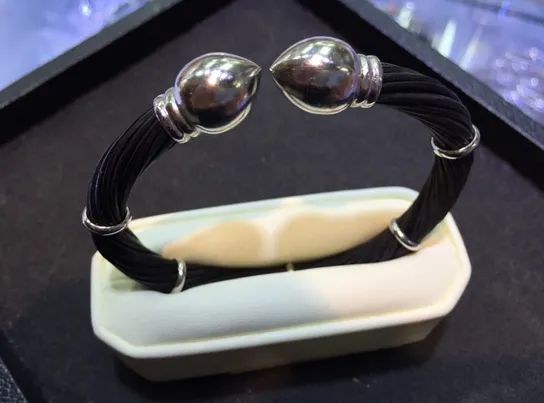
Photo: Swandk, CC BY-SA 4.0, via Wikimedia Commons
A bracelet that clinks like a holiday
There is a particular sound that gives a charm bracelet away before you even see it. A soft, slightly chaotic clinking, like someone walking with a pocket full of cutlery. For years that sound meant one thing: a souvenir shop near a pier, a rack of identikit trinkets and a bracelet you wore twice.
Then something shifted. Charm bracelets are back on wrists that would never have touched them a decade ago, and the good ones look nothing like the tat. They look like diaries. Small, deliberate, slightly odd diaries that jangle when you wave at someone across a café.
For a coastal wardrobe, that is a gift. A seaside life is full of small, specific moments — a windbreak going up badly, a first swim of the year, a chip stolen out of your hand by a gull with no shame. A charm bracelet is the only piece of jewellery that can hold all of that.
Why charms made a comeback
Part of it is fatigue. We have spent years buying the same three necklaces as everyone else because an algorithm said so. A charm bracelet is the opposite of that: it is finite, slow, and cannot be replicated. You add one thing a year, maybe less. Nobody can buy the exact same one because nobody has your particular combination of holidays, hand-me-downs and impulse purchases from a gallery in Pembrokeshire.
There is also a practical appeal. It is jewellery that rewards patience rather than spend. You can start with a plain chain and one charm and wear it for a year without looking underdressed.
Start with the chain, not the charms
Rookie error number one is buying six charms on day one. Buy the bracelet first, wear it empty for a fortnight, and get used to the weight.
Three formats are worth knowing. The classic link bracelet has open loops you can add to year after year; make sure it has a proper safety chain, or you will lose the lot somewhere between the beach hut and the car park. The rigid bangle with dangling charms is tidier and less noisy — good if clinking gets on your nerves. The European bead style will not take traditional flat charms, so it is a different collection altogether; decide which game you are playing before you spend.
On metals: sterling silver if you plan to wear it daily and swim in it occasionally. Gold vermeil and gold-filled are lovely but thinner plating will start to show at the clasp, so take it off before bed. Solid gold is a lovely thing to inherit and a hard thing to justify new.
The twelve coastal charms worth hunting for
These are the ones that read as coastline rather than cliché — small enough to sit together, distinct enough that each one says something.
The lighthouse. The most obvious of the twelve and still the best. Look for a hand-pierced silhouette rather than a cast lump, and choose a lighthouse you have actually visited if you can. Mine is the squat one on the end of a Norfolk spit, and I have never once looked at it and thought of the souvenir shop.
The deckchair. Enamel stripes, a tiny wooden-look frame. Ridiculously cheerful, costs almost nothing, and instantly says August bank holiday.
The lifeboat. A quiet nod to the people who go out in weather nobody else would. Several small British makers donate a portion of sales; ask before you buy.
The 99. An ice cream cone, flake and all. Wear it in February for maximum effect.
The pier. A fretwork silhouette — cast-iron legs and a little pavilion. Brighton gets all the attention, but a Clevedon or a Cromer version tells a better story.
The starfish. The workhorse charm. Sits flat, never clashes, looks good on a silver chain and on a gold one.
The sea glass. Get a real piece, bezel-set, milky green or pale blue. Frosted glass catches light in a way enamel never will.
The beach hut. Pastel enamel on a tiny door. Pick a colour that is not the one on every tea towel in the county.
The anchor. The one traditional nautical charm that has never gone out of fashion. Useful filler between the showier pieces.
The gull. Ideally mid-squawk. Slightly threatening, deeply British.
The wave. A crest or a curl of water, usually in silver with a brushed finish. Good for breaking up a run of enamel.
The crab. The wildcard. Put it at the end of the bracelet where it can catch on a sleeve and make you smile.
Curating without clutter
A charm bracelet becomes a charm soup when everything is the same size and the same finish. Two rules keep it readable.
First, vary the scale. A big enamel ice cream needs a tiny silver anchor beside it, or the whole thing becomes a nursery mobile. Second, keep the charms to between seven and twelve, and let the count climb slowly. If you are already at twelve, the new charm goes on a second bracelet or a necklace — or waits in a small dish by the mirror, which is honestly where half the pleasure lives.
It also helps to leave gaps. Real charm-wearers leave space between charms so the links move, the bracelet sits flat on the wrist and the thing does not turn into a rattle.
Mixing metals without panic
Silver and gold together looks intentional when you anchor it. Pick the metal of the bracelet itself, then repeat your second metal at least twice across the charms so it reads as a decision rather than an accident. Brass and bronze charms warm silver up beautifully. Keep white metals away from rose gold unless you are confident — that is the one combination that tends to look like a mistake rather than a mood.
Where to find charms from small makers
The high street will sell you a lighthouse. It will sell everyone a lighthouse. Better: the jeweller in a seaside town who casts from wax in the back room, the gallery that stocks three silversmiths from within fifty miles, the maker at a Christmas fair who will engrave a date on the back of a starfish for a fiver.
Ask, always, whether a piece is hallmarked. UK silver over the weight threshold should be, and a maker who is relaxed about that question is usually relaxed about other things too.
Living with it, salt and all
Take it off for swimming pools and hot tubs — chlorine is unkind to silver and unforgivable to enamel. After a genuinely sandy day, rinse in cool fresh water, dry with a soft cloth and check the links; sand is abrasive and will wear a jump ring through in a season. Enamel and pearl charms never go near an ultrasonic cleaner.
Start with one charm. Something you can point at and tell a story about. The rest will follow, one summer at a time.