Red Pen at the Ready: A Coastal Shopper's Black Friday Sparkle Checklist
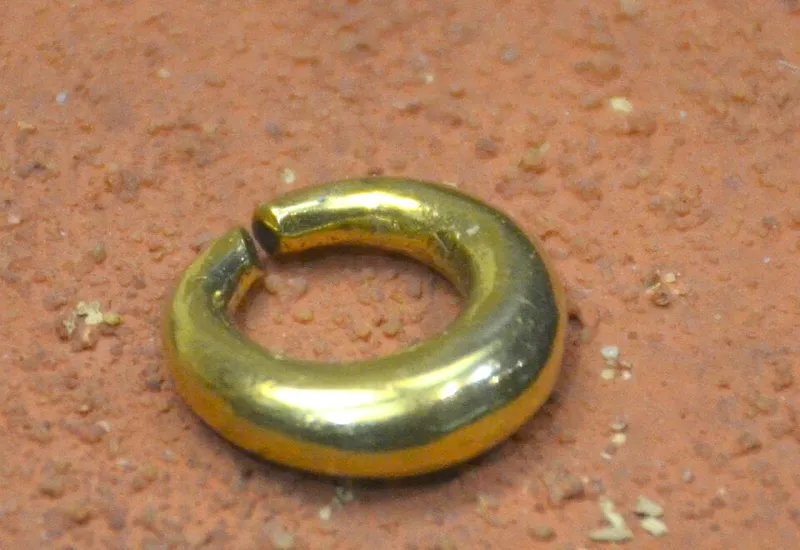
Photo: Silar, CC BY-SA 4.0, via Wikimedia Commons
Black Friday 2026 falls on 27 November, with Cyber Monday trailing along on the 30th. Which means that right about now, somewhere between the supermarket shop and the school run, your feed has quietly filled with earrings photographed on driftwood and captions promising 70% off.
Coastal jewellery is unusually exposed to a bad bargain. A necklace that lives on a beach bag strap, gets worn under a wool coat collar and spends July in the vicinity of sun cream is doing harder work than a party piece in a velvet box. Salt air, friction and damp all speed up the moment a thin plating gives way. Buy badly in November and you'll be looking at a green wrist by February.
So here's the audit I run before I spend anything in the sales. No spreadsheets required — just a red pen and a bit of healthy suspicion.
Start with the calendar, not the cart
A genuine discount has a short life. If the same 'limited time' banner has been up since the first week of November and will still be there on 20 December, that isn't a Black Friday price — it's the price, with a sticker on it. Check the listing against Google Shopping or a price-history tool, and if you happen to have screenshotted something in October, dig it out. It's the single fastest way to spot a 'was' figure that never existed.
Read the metal before you read the percentage
The percentage off tells you nothing about what's in the box. The materials line tells you everything.
- Sterling silver should say 925, and the piece should carry a hallmark if it's heavy enough to need one.
- Vermeil is gold over sterling silver — the widely accepted minimum is 2.5 microns of gold. If a seller says vermeil without a thickness, ask.
- Gold-filled is a bonded layer of gold, usually 5% of the piece by weight (often written as 1/20 12K). It behaves very differently from plating and outlasts it comfortably.
- PVD is a vapour-deposited coating, typically over stainless steel or titanium, and it's the toughest option at the affordable end — but it still has a thickness, and thinner means shorter.
- Plated brass is fashion jewellery. That's fine, as long as it's priced like fashion jewellery and you're not expecting three summers out of it.
If a listing says 'gold plated' with no base metal and no micron count, treat it as a one-season piece. Sometimes that's exactly what you want for a wedding in December. Just don't pay vermeil money for it.
The micron question sorts the field fast
Half a micron of gold over brass and two and a half microns over silver look identical in a photograph and entirely different by March. Coat collars, scarves and the rub of a seatbelt are what kill plating, not seawater alone.
A seller who can answer 'how many microns?' in a message is a seller who knows their stock. A seller who replies with 'it's high quality gold plated, dear' is telling you something useful too.
Hallmarks, warranties and the boring paperwork
In the UK, silver items over 7.78g, gold over 1g and platinum over 0.5g must be hallmarked by an assay office. A '925' stamp on its own is a maker's claim, not a hallmark — the two are not the same thing, and imported pieces still need the proper mark.
On warranty, twelve months is a fair standard. Read what it actually covers: manufacturing faults, usually, and almost never plating wear, because plating wearing down is classed as wear and tear. That's not a swindle, but it does mean the micron count matters more than the guarantee.
Do the dull bit. Save the listing as a PDF, keep the order confirmation, and screenshot the materials description. If a clasp fails in April, you'll want the version of the page that existed when you bought it.
The returns rule most shoppers forget
Buying online in the UK gives you 14 days from delivery to change your mind, and another 14 to send the goods back. That applies to sale items too. A flat 'no returns on sale purchases' policy isn't a lawful blanket rule for distance selling — the usual exceptions are personalised or made-to-order pieces, and pierced earrings where the hygiene seal has been broken.
Then do the boring arithmetic. If returning costs you £4.50 and the earrings were £22, your real risk is a fifth of the price. Check whether you'd get a refund or a credit note, and whether the free delivery threshold disappears when you return part of an order.
Red flags worth walking past
- A 'was' price with no evidence it was ever charged.
- Countdown timers that reset when you refresh.
- 'Gold tone', 'surgical steel' or 'hypoallergenic' as the only metal information on the page.
- No UK returns address, or a contact form and nothing else.
- Reviews mentioning green skin, black marks or clasps failing in week two — believe them.
- Studio photos that never show the clasp, the ear wire or the back of the pendant.
- Silence on nickel. UK REACH limits nickel release on items in prolonged skin contact, and a decent brand will say so without being asked.
The five-line value checklist
Before you click, the page should answer all five. If it answers three, you're gambling.
- The metal is named for every component — chain, clasp, ear wires, charm loops.
- Plating thickness is given in microns.
- There's a hallmark, or a clear statement about exemption.
- The warranty length is stated, along with what it covers.
- The returns window, who pays postage, and whether it's refund or credit.
Then do the cost-per-wear sum. Sixty pounds on a vermeil hoop you'll wear twice a week for two years beats twelve pounds on a plated pair that dies by New Year. Not because expensive is better — because the maths is.
Where the genuine deals usually hide
End-of-line colours, discontinued charms, last season's stone shades, seconds with a barely visible finish flaw, and independent makers clearing sample stock quietly on their own channels. Multi-buys on the pieces you actually wear — small hoops, a plain chain, a single stud you won't notice you're wearing — are where the savings hold up. Statement pieces are the ones that end up unworn in a drawer, however cheap they were.
One last thing before you click
If the piece arrives with a care card, read it that evening rather than in June. Rinse after sea swims, dry properly, keep it away from perfume and hairspray, and store it somewhere dry rather than on a hook in the bathroom.
And ask yourself the only question that really matters: would I buy this at full price in March? If the answer is no, the discount is doing the selling, not the jewellery. A bargain is only a bargain if it's still in your jewellery box next November.